Majid Jadidi
Google Scholar|Email|LinkedIn|Research|Trainees|Publications
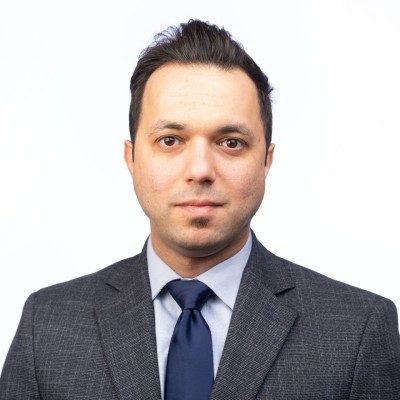
I am an Assistant Professor in the Department of Biomechanics at the University of Nebraska Omaha (UNO). I am also Co-Founder and CEO of Aquablade Vascular, an early-stage medical device company.
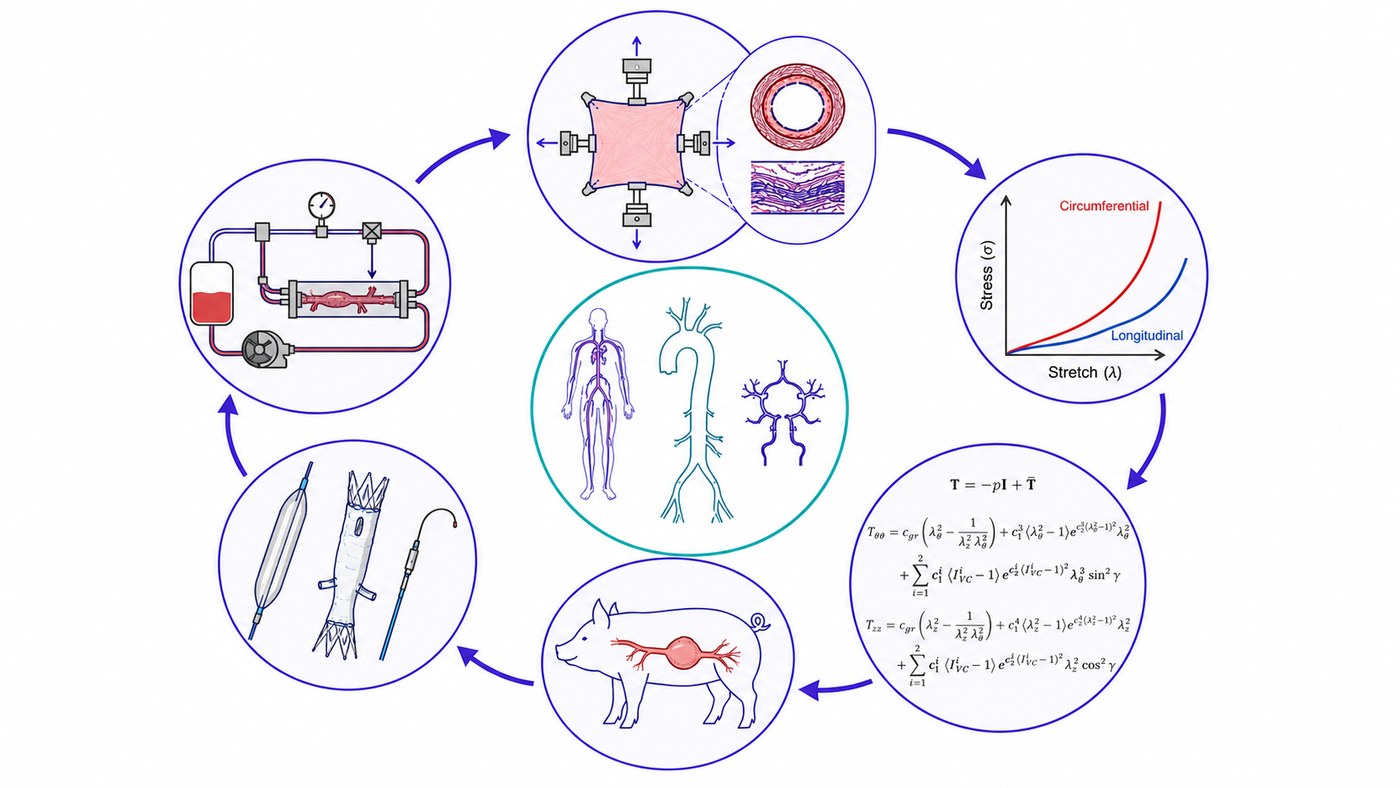
Our goal is to understand how human blood vessels function and fail, and to develop tools, devices, and therapies that improve cardiovascular and cerebrovascular care. We take a multidisciplinary approach that spans experimental biomechanics, imaging, computational modeling, and close work with clinicians. We characterize the biomechanics of human blood vessels and other soft tissues, including the heart, in health and disease, and use what we learn to guide the design and evaluation of new devices and treatments. This includes benchtop testing under physiologically relevant conditions, computational models that predict how vessels and tissues respond to disease, treatment, and implanted devices, and machine learning applied to large experimental datasets.
We work closely with vascular surgery, cardiothoracic surgery, neurosurgery, and pathology at the University of Nebraska Medical Center, with Live On Nebraska, and with medical device companies.
I received my Ph.D. in Mechanical Engineering from the University of Nebraska-Lincoln, with a minor in business administration, and a B.Sc. in Mechanical Engineering from Isfahan University of Technology with a double major in Industrial Engineering and Systems Management. I trained in the Department of Surgery at the University of Nebraska Medical Center before joining UNO in 2021.
Research
Elastic Fiber Remodeling in Aging Arteries
Arterial stiffness is a major determinant of cardiovascular health. Elastic fibers are key contributors, providing the compliance required to withstand cyclic loading. With aging, mechanical loading progressively degrades the elastic fibers, leading to vascular stiffening and cardiovascular pathologies. Because elastic fibers turn over slowly, adult arteries are generally viewed as having limited capacity to restore organized elastic structure, and arterial aging is treated as a one-way process of mechanical degradation.
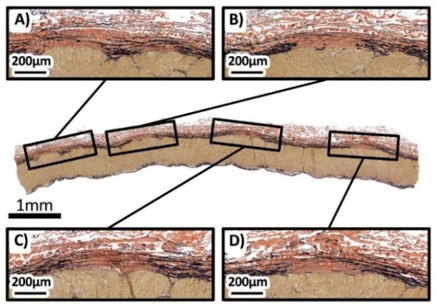
Our multiscale biomechanical evaluations of human femoropopliteal arteries challenge this view. We identified focal discontinuities in the external elastic lamina in donors both young and old, often containing thin elastic fibers with histologic and molecular features consistent with localized elastic-matrix remodeling. We combine structural analysis, spatial transcriptomics, bioinformatics, biomechanical testing, and controlled-loading experiments to study this remodeling.
Abdominal Aortic Aneurysm
Abdominal aortic aneurysm is a progressive dilation of the aorta that is usually silent, and rupture is fatal in most cases. Most aneurysms are too small for repair, so patients spend years under surveillance with no treatment available to slow growth.
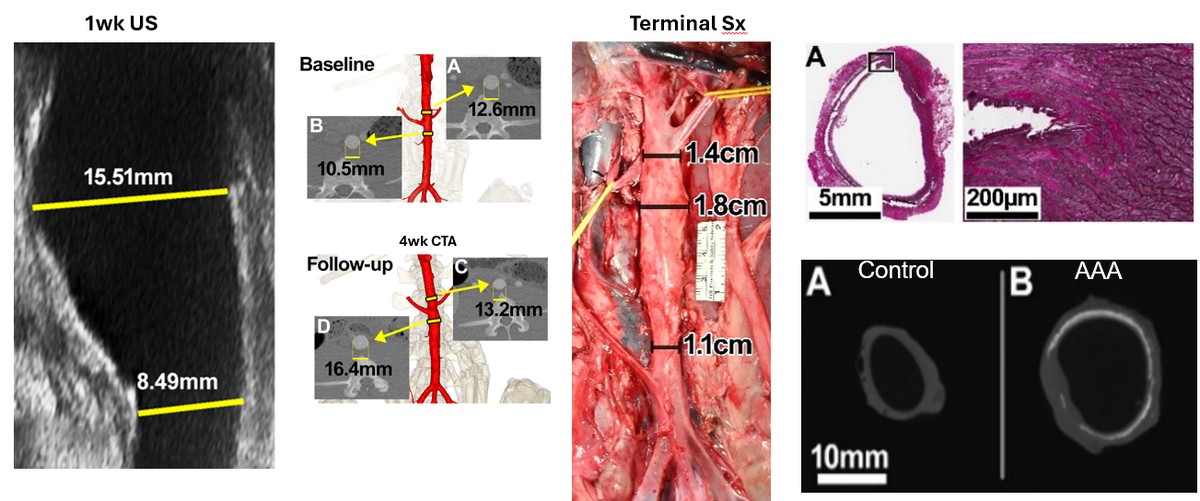
We developed a large animal model of aortic aneurysm in swine, created entirely endovascularly by delivering a proteolytic cocktail into the aortic wall, without any open surgery. The model reproduces the medial degeneration, calcification, and mechanical changes seen in human disease. We use it together with complex benchtop setups to develop novel devices and materials for aneurysm monitoring and repair.
Aortic Dissection
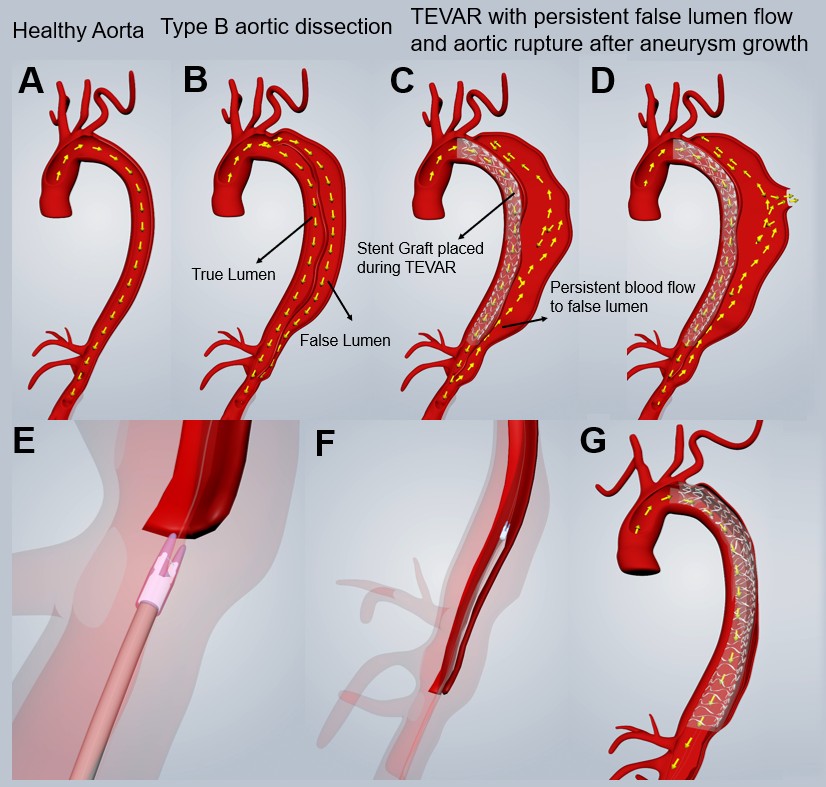
Chronic Type B aortic dissection is a lethal condition in which the long-term outcome of thoracic endovascular aortic repair is often limited by persistent false lumen perfusion, driven by a stiff, fibrotic dissection septum. Clinical evidence suggests that adjunctive aortic septotomy, the longitudinal transection of the septum to create a single unified aortic channel, can be important for durable repair. Clinicians currently lack a purpose-built device and must rely on improvised tools that carry risks of uncontrolled tearing or collateral thermal injury to the aorta and existing stent-grafts.
We are developing a catheter for endovascular septotomy that addresses the limitations of current improvised techniques, and validating it on the benchtop and in a porcine model.
Machine Learning and Computational Modeling
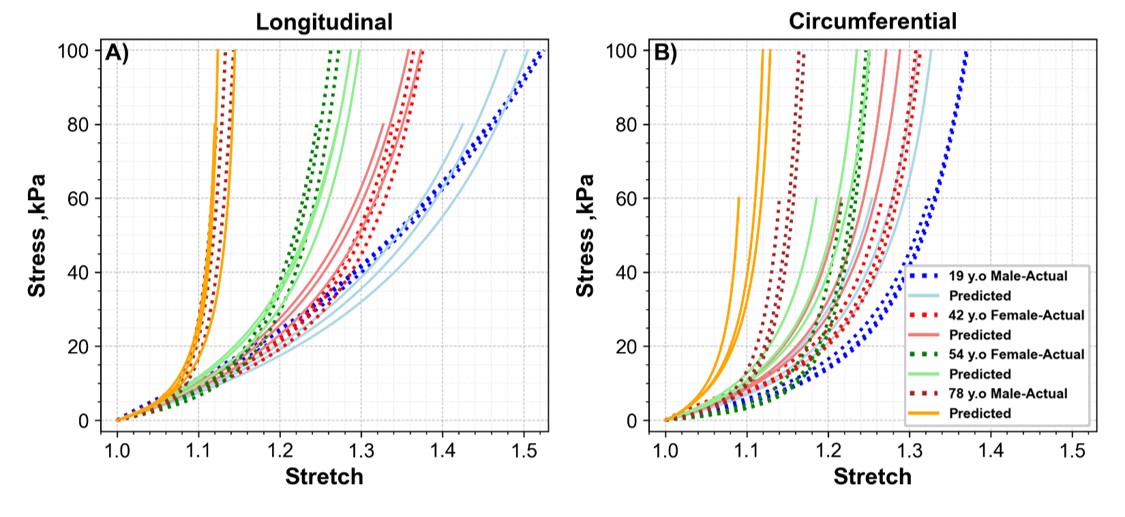
We build machine learning and statistical models on large human tissue datasets to identify the factors that drive vascular disease and how they interact. We also develop elastic and viscoelastic models that describe how blood vessels behave under different loading conditions.
Increased Intracranial Pressure (ICP) Management
Elevated intracranial pressure following traumatic brain injury, intracerebral hemorrhage, or stroke is a major cause of death and disability. When standard management fails, the remaining option is decompressive craniectomy, which is effective but carries substantial morbidity and requires open neurosurgical capability. With neurosurgery colleagues at the University of Nebraska Medical Center, we are developing endovascular approaches to reduce intracranial pressure without open cranial surgery, using large animal models, benchtop systems, and computational modeling of cerebral hemodynamics and cerebrospinal fluid dynamics.
Biomechanics and Pathophysiology of Peripheral Arterial Disease
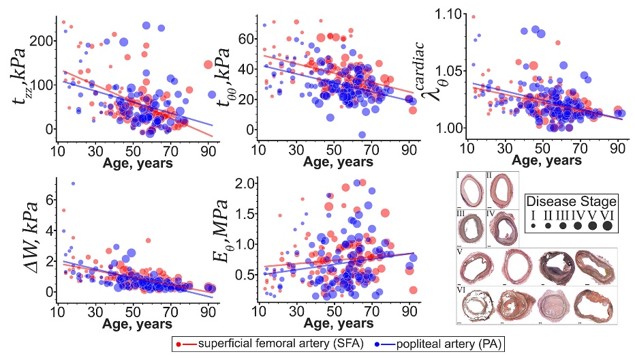
Peripheral arterial disease is systemic atherosclerosis affecting the arteries that supply the lower extremities. Systemic risk factors such as age, diabetes, and smoking play a significant role in its pathophysiology, but lesions distribute unevenly along the femoropopliteal artery and often co-localize with the adductor hiatus and the popliteal artery below the knee, where the vessel deforms most severely during locomotion. Using human arteries from donors of all ages, we combine intravascular ultrasound, micro-CT, biaxial mechanical testing, constitutive modeling, tissue proteomics, and machine learning to determine how patient risk factors, local biomechanics, and vascular wall biology together shape where and how severely disease develops.
Vascular Biomechanics in Pregnancy
Hypertensive disorders of pregnancy are a significant cause of maternal and fetal complications, and patients at risk are difficult to identify early. Working with clinicians at the University of Nebraska Medical Center and Children's Nebraska, we study the biomechanics of placental and umbilical vessels and how the maternal vasculature remodels during pregnancy, with the aim of earlier detection and new treatment targets.
Tools for Medical Image Analysis
We develop automated pipelines and software for analyzing medical images, including whole-slide histology and CT angiography data, and release them for the research community.
Openings
We are recruiting graduate students in vascular biomechanics. Apply through the Department of Biomechanics and send your CV to mjadidi@unomaha.edu.
Interested undergraduates, please send an email to mjadidi@unomaha.edu.
For preclinical evaluation studies and clinical or industry collaborations, contact me at the same address.
Trainees
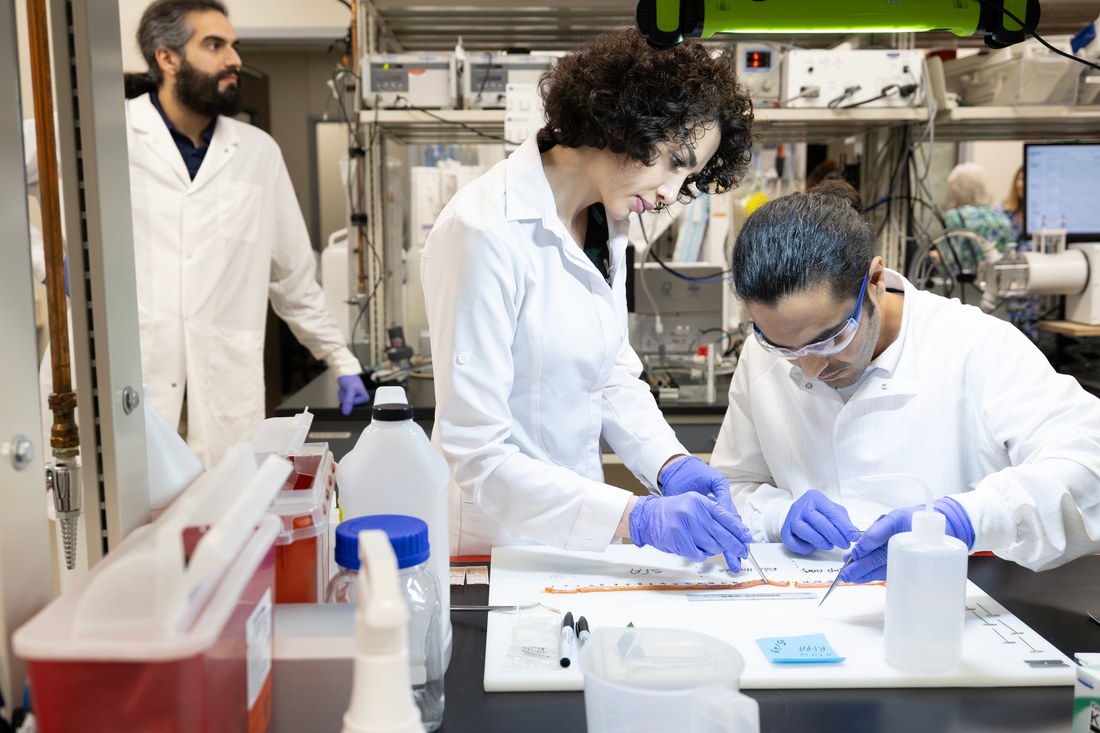
- Bahman (Pedram) Kargarbahrkhazar, Ph.D. student
- Adisu Mengesha Assefa, Ph.D. student
- Sanaz Farmani, M.S. student
- Aurshon Bavari, undergraduate researcher
Alumni
- Sayed Ahmadreza Razian, Ph.D. (co-supervised)
- Elham Zamani, M.S.
- Madihah Kazim, M.S.
- Nicholas Kinsella, undergraduate researcher
- Connor Tiedtke, undergraduate researcher
- Hesan Sedaghat, undergraduate researcher
- Elias Pipinos, undergraduate researcher
In memory of Ali Zolfaghari Sichani, a doctoral student in our group, who died in July 2024. The Department of Biomechanics awards the Ali Zolfaghari Sichani Memorial Scholarship each year in his honor.
Outreach and Service
- Reviewer for NIH, NSF, and scientific journals and conferences
- Organizing committee member, Great Plains Biomechanics Conference, 2022–2026
- Advisor, Biomechanics United Student Group, University of Nebraska Omaha
- Organized or assisted with more than 20 outreach activities for middle school, high school, and undergraduate students
Publications
Titles link to the journal, DOI, or preprint. * corresponding author, = equal contribution. Also on Google Scholar.
Annals of Biomedical Engineering, 2026 (in press)
Biomechanics and Modeling in Mechanobiology, 2026, 25(2), 29
Journal of Medical Devices, 2026, 1–31
Frontiers in Biomedical Devices, ASME IDETC-CIE, 2026, 89435, V001T01A004
Frontiers in Biomedical Devices, ASME IDETC-CIE, 2026, 89435, V001T01A005
bioRxiv, 2026 (preprint)
bioRxiv, 2025 (preprint)
bioRxiv, 2025 (preprint)
Journal of the Mechanical Behavior of Biomedical Materials, 2025, 174, 107269
Biomechanics and Modeling in Mechanobiology, 2025, 24, 1565–1589
Scientific Reports, 2025, 15(1), 11120
Acta Biomaterialia, 2024, 188, 223–241
Acta Biomaterialia, 2024, 189, 413–426
Journal of the Mechanical Behavior of Biomedical Materials, 2024, 155, 106535
Acta Mechanica, 2024, 235, 4149–4174
Acta Biomaterialia, 2023, 177, 278–299
Annals of Biomedical Engineering, 2023, 52(4), 794–815
Journal of the Mechanical Behavior of Biomedical Materials, 2023, 150, 106332
Acta Biomaterialia, 2023, 170, 68–85
Computer Methods in Biomechanics and Biomedical Engineering: Imaging & Visualization, 2023, 11(5)
Acta Biomaterialia, 2022, 153, 333–341
In: Solid (Bio)mechanics: Challenges of the Next Decade. Springer, 2022, 157–179
American Journal of Physiology — Heart and Circulatory Physiology, 2021, 320(6), H2313–H2323
Journal of Trauma and Acute Care Surgery, 2021, 91(2), 302–309
Acta Biomaterialia, 2021, 121, 431–443
Acta Biomaterialia, 2021, 121, 461–474
Acta Biomaterialia, 2021, 119, 268–283
Acta Biomaterialia, 2020, 103, 172–188
Biomechanics and Modeling in Mechanobiology, 2019, 18(6), 1591–1605
Contact
Department of Biomechanics, University of Nebraska Omaha
6160 University Drive South, Omaha, NE 68182
mjadidi@unomaha.edu